Conversation around this book:
https://notebooklm.google.com/notebook/47c329af-1dd0-4ac9-b860-a61ab8e920a2/audi
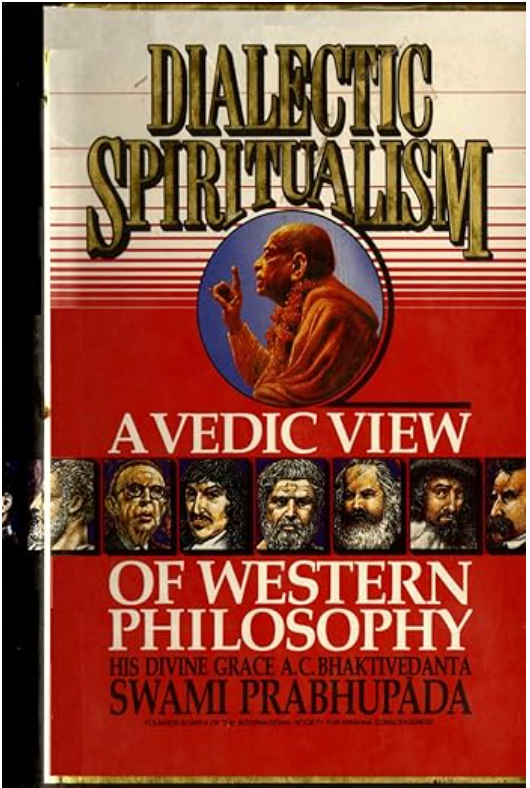
Understanding the nature of God through various philosophies
The various philosophies discussed in this book help to understand the nature of God by contrasting them with Vedic philosophy. The sources present different thinkers, from Socrates to John Dewey, who have attempted to comprehend the nature of God through reason, speculation, and observation of the material world. However, from the Vedic perspective, these philosophies often fall short, as they do not consider divine revelation as a valid source of knowledge.
- The sources show that many philosophers fall into impersonalism, arguing that attributing qualities to God limits Him.
- Others focus on ethics and morality as the path to understanding God.
- Some, like David Hume, advocate for a “natural religion” based on the observation of the material world.
- Others, like Karl Marx, completely reject the idea of God, considering it an illusion created to control the masses.
Vedic philosophy, on the other hand, is based on divine revelation as found in sacred texts such as the Bhagavad-gita and the Srimad-Bhagavatam. These texts present God as the Supreme Personality, possessing infinite opulences such as knowledge, wealth, beauty, strength, fame, and renunciation.
- Vedic philosophy does not reject reason and logic, but considers them insufficient to fully understand the nature of God.
- It emphasizes the importance of receiving knowledge from an authorized source, such as a genuine guru, who has received knowledge through the disciplic succession.
- The Vedic understanding of God is personalist, recognizing that God is a person with attributes and pastimes.
- It acknowledges that God is the cause of everything, including both the material and spiritual worlds.
By comparing the various philosophies with Vedic philosophy, we can see that divine revelation is crucial for understanding the nature of God. Speculation and reason, without the guidance of scriptures and a genuine spiritual master, can lead to incomplete or erroneous conclusions about the nature of God.